
Flexible Circuit Technology
The ability to reduce the size and weight of electrical and electronic products, while enabling greater levels of flexibility, has made flexible circuits one of the fastest growing interconnection technology segments. Almost every industry benefits from the versatility of these technologies, from automotive and medical applications to consumer electronics and even space hardware.
Essentially, a flexible printed circuit (FPC) consists of a substrate and conductive film on which other components are attached via soldering or conductive adhesives. These materials can be either a non-woven polyimide or polyester base, with conductor patterns printed in a conductive metal such as copper foil. Conductor patterns may also be etched through the base layer to form holes for interconnections, and the conductors can be patterned on both sides.
Single-sided flexible circuit are the most common construction in production today, and they are typically best suited to dynamic flexing applications. These consist of a single patterned conductor layer on a flexible dielectric film, with component termination features accessible from one side. Conductor layers may be fabricated from various metal foils, although copper is the most popular choice. Double-access flex, sometimes called back-bared flex, uses the same basic construction as single-sided circuits but allows access to conductor features from both sides. This is often used in IC packaging applications and requires more sophisticated processing to allow for this capability.
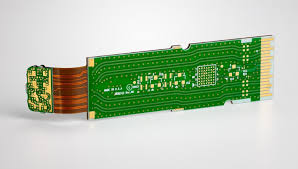
Flexible Circuit Technology – What Industries Benefit From It?
Other types of flex circuits can include multi-layered constructions that connect multiple single-sided conductive layers with insulating layers in between. These are often used to address special interconnection requirements that can’t be addressed with a single-sided circuit, such as requiring crossovers or impedance control. They can also be used to avoid a hole in the base layer that would compromise flex performance.
In addition to these traditional flex circuits, manufacturers have created more exotic forms of the technology, including a type that combines a rigid PCB with an additive flexible circuit. These are known as flex hybrids and can help provide an ideal solution in applications that require both rigid and flexible components.
The growth of flexible circuit technology has been driven by the need to meet ever-increasing demands for functionality and portability in a wide range of industries. The key is to partner with an experienced flex circuit manufacturer that can offer the right solutions for your specific application.
A reliable company can produce custom-designed flex circuits in a variety of different materials and designs. The team can also perform a number of additional services, including prototyping and testing. In addition, they can assist with design and layout of the circuit board.
The company’s experienced engineers can also make recommendations on the best materials, design, and assembly processes for your particular application. This can help you to create a flexible circuit that meets your unique needs while providing significant cost savings. The experts can work with a variety of industries, from consumer products to aerospace and military applications. In fact, the company’s extensive experience with rigid-flex, flex-PCB, and HDI designs makes them an ideal partner for any project.
