
Printed Board Assembly Services Handle Design Changes
When designing a printed circuit board, it’s important to adhere to design for manufacturing guidelines that facilitate uncomplicated assembly. These include proper component-to-component spacing, leaving enough room around connectors to access them, and avoiding overlapping silkscreen markings. These techniques avoid manufacturing issues that could otherwise delay production and delivery of the final product.
As you evaluate printed board assembly services, consider their track record for timely project completion and their communication and responsiveness. If they’re unwilling to provide clear, regular updates or have hidden fees, look elsewhere.
Whether you’re building 1,000 boards monthly or a million annually, the assembly process can involve many different factors. For example, optimizing processes for a low-volume production runs requires far different considerations than when building high-volume boards.
To help ensure that the finished product meets your expectations and is ready to be shipped, qualified QA testers will run a variety of automated and manual tests. These tests verify that assembled components match the bill of materials (BOM), that all solder joints are strong and secure, and that no defects were caused by any errors during production.
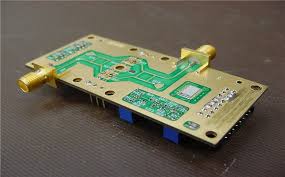
How Printed Board Assembly Services Handle Design Changes
These tests also confirm that your circuit board is able to perform the function for which it was designed. For example, electrical testing like in-circuit tests and flying probes validate that all solder connections are functional and that there are no shorts or opens. Automated optical inspection and manual microscopic checks will also check for basic continuity, as well as polarity/orientation indicators on the silkscreen.
If a BOM change occurs during the manufacturing process, it’s likely that the entire batch of boards will need to be reworked. To avoid costly rework and delays, it’s crucial that you work closely with your assembly service provider to make sure the BOM is accurate at the time of ordering.
As a customer, you can also minimize the possibility of production delays by ensuring that the parts needed for your boards are available at the time your order goes into production. This means that any parts with long lead times should be ordered early and consigned to your assembly vendor so they’re ready when the PCBs go into production.
When choosing a PCB assembly service, look for one that offers both full and partial turnkey options. With a full turnkey service, the assembly provider sources all of your required parts and builds the entire circuit board. In this case, you’ll need to provide the BOM, Gerber files, and product dimensions. With a partial turnkey service, you may need to supply some components — known as consigned parts — but the assembly provider takes responsibility for any issues related to these components. This helps reduce production delays and ensures quality control by having a single point of accountability. However, a full-turnkey service can also be more expensive than a partial turn-key service. It all depends on your needs and the level of control you want over your project. To find the right service for your unique requirements, consult with several providers and see which ones can offer you the best value.
