
selective soldering in circuit board assembly
Selective soldering stands as a pivotal technique in the realm of circuit board assembly, offering unique advantages and addressing specific challenges that traditional soldering methods may struggle to overcome. This specialized soldering process allows for targeted soldering of through-hole components on a circuit board, providing greater flexibility, precision, and efficiency in assembly operations. In this article, we explore the significance of selective soldering in circuit board assembly and its role in modern electronics manufacturing.
One of the key advantages of selective soldering lies in its ability to precisely target soldering operations on specific areas of the circuit board, particularly through-hole components that cannot be easily soldered using surface-mount techniques. Through-hole components, such as connectors, switches, and large capacitors, require soldering on both sides of the circuit board, making them challenging to solder using traditional reflow soldering methods. Selective soldering machines employ precision nozzles or masks to apply solder only to designated through-holes, ensuring accurate soldering while minimizing the risk of solder bridging or excess solder buildup.
Moreover, selective soldering offers superior thermal management capabilities compared to traditional wave soldering techniques. In wave soldering, the entire circuit board is passed over a wave of molten solder, exposing all components to high temperatures simultaneously. This can pose challenges for heat-sensitive components or assemblies with mixed-technology components that require different soldering temperatures. Selective soldering, on the other hand, allows for localized heating of individual through-hole components, minimizing thermal stress on surrounding components and ensuring optimal solder joint quality and reliability.
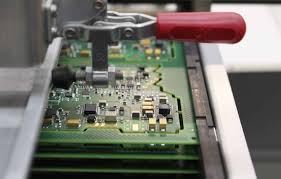
What’s the significance of selective soldering in circuit board assembly?
Furthermore, selective soldering enables efficient processing of high-mix, low-volume production runs, where frequent changeovers and setup adjustments are common. Traditional wave soldering lines are optimized for high-volume production of uniform circuit boards, making them less suitable for small-batch or custom assembly jobs. Selective soldering machines offer quick setup and programming capabilities, allowing manufacturers to easily switch between different circuit board designs, component layouts, and soldering requirements. This flexibility improves production agility, reduces setup time, and enables manufacturers to respond quickly to changing customer demands and production schedules.
Additionally, selective soldering enhances process control and quality assurance in circuit board assembly by reducing the risk of solder defects and inconsistencies. The precise application of solder to specific through-holes minimizes the likelihood of solder bridges, cold joints, or other soldering defects that can compromise electrical connectivity and reliability. Selective soldering machines often incorporate advanced features such as solder level monitoring, flux deposition control, and automated inspection systems to ensure consistent soldering performance and detect any defects or anomalies in real-time. This level of process control improves product quality, reduces rework, and enhances overall production efficiency.
Moreover, selective soldering enables the integration of novel materials and technologies into circuit board assembly processes, expanding the design possibilities and capabilities of electronic devices. For example, selective soldering machines can accommodate special solder alloys, flux formulations, or conformal coatings tailored to specific application requirements or environmental conditions. This flexibility allows manufacturers to experiment with new materials and techniques, optimize assembly processes, and push the boundaries of innovation in electronic design and manufacturing.
In conclusion, selective soldering plays a vital role in modern circuit board assembly, offering unique advantages in flexibility, precision, efficiency, and quality assurance. This specialized soldering technique enables targeted soldering of through-hole components, improves thermal management, supports high-mix, low-volume production, enhances process control, and facilitates the integration of advanced materials and technologies. By leveraging the benefits of selective soldering, manufacturers can achieve higher production quality, flexibility, and innovation, ultimately delivering reliable and innovative electronic products to consumers.
