
Start Piano Transcription
If you want to learn how to transcribe, then you’ll first need to become proficient at reading sheet music. This musical language features a set of symbols that convey everything from the pitch of a note to its duration and volume. As you progress in your piano playing, these symbols will become as familiar to you as the letters of the alphabet. To get started, look for a piece of music that you enjoy listening to and would like to play on the piano. Ideally, choose a piece that isn’t too complex and within your skill level. Once you’ve selected your piece, be sure to pick out a few things that you don’t know such as the key signature, time signature, and note values. Additionally, pay attention to any ornamentation above or below the notes such as accents, turns, grace notes, dots and the like.
Once you’ve familiarized yourself with the notation system, start by learning to read the lines and spaces that indicate which notes to play in the treble staff (for your right hand). This will take some time. Once you’ve memorized all of the letter names on the treble staff, it’s time to move on to the bass clef. This is a little easier and involves just moving your fingers down the keyboard from left to right until you find each group of two black keys and their corresponding white keys.
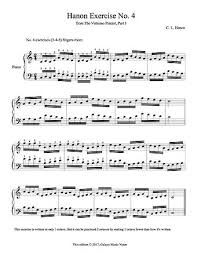
In addition to the clefs, it’s also important to understand the notation used to show you how long to hold each note for. Depending on the length of the note, the symbol used will change. For example, short notes are usually indicated by a single circle, while long notes are indicated by a double circle. In some cases, you may even see a flag or a dot to denote a rest.
https://tartalover.net/nicole-pesce
Where Can I Start Piano Transcription?
It’s also important to familiarize yourself with the finger numbers used to indicate which fingers are to be played. All piano players, from beginner to advanced, use this method of indicating which finger is responsible for each note. Your thumb is number 1, the pointer finger is number 2, the middle finger is number 3, the ring finger is number 4, and the pinky finger is number 5.
https://m.youtube.com/@tartalover2682/videos
Another aspect of piano transcription that you need to understand is how chords are arranged on the page. If you’re working with a choral piece, for instance, you’ll probably need to transpose it into the proper key so that you can actually play the melody. This is a process called harmonisation and can be done with a variety of tools such as a capo.
Once you’ve mastered the basic symbols and note values, it’s time to begin tackling more complicated parts such as chord progressions and rhythms. For this, it’s important to use an audio clip of the original piece to help guide you. It’s also helpful to work with a teacher to ensure that you’re interpreting the score properly.
